

Signs of High Quality Single Origin Beans: A Buyer's Guide
Quick Summary
High quality single origin beans come from a traceable place, such as a named region, washing station or farm, and show even size, clean sorting, a clear processing method and a roast date. Origin alone does not guarantee quality, so check the label details and then taste the cup.
- Check the label for origin level, altitude, variety, process and roast date.
- Specific farm or washing station names give you more to verify than a country name.
- Uniform bean size and color suggest careful sorting and even roasting.
- Few defects are normal, but many defects often show up as off-flavors in the cup.
- Store beans in an airtight container away from heat, light and moisture, and grind just before brewing.
Table of Contents
- What Single Origin Coffee Actually Means
- Single Origin vs Blend: When Each Makes Sense
- Visual Signs of High Quality Single Origin Beans
- How to Read a Single Origin Label
- Freshness, Roast Date and Storage After Opening
- Cupping, Sensory Checks and Choosing Single Origin Espresso Beans
- Start Your Own Single Origin Tasting at Home
- Frequently Asked Questions
What Single Origin Coffee Actually Means
Single origin coffee comes from one identifiable place: a specific country, region, farm or estate, rather than a mix of beans gathered from several growers. A fuller guide to what distinguishes single origin coffee explains the term in more depth.
A common assumption is that "single origin" automatically means "better." A traceable origin tells you where the coffee came from. Whether it's excellent depends on the growing conditions, how it was processed, and how carefully it was roasted.
Why origin, farm and altitude shape flavor
Growing conditions leave a clear mark on the bean.
Altitude matters because cooler temperatures stretch the growing season. Our Ethiopia Natural grows at 1700 to 1900 meters in the Sidama Zone and has milk chocolate, fruity and caramel tasting notes.
Processing also changes the flavor. The Ethiopia Natural is full natural and dried on raised beds. Our Tanzania lot is fully washed and dried on raised beds.
Single Origin vs Blend: When Each Makes Sense
A blend combines beans from several origins, roasted together to produce a consistent flavor year after year.
A single origin coffee shows you what one place and one processing method can do. Its flavor changes with the harvest, so you may find a lot is brighter one season and sweeter the next.
Choose single origin when you want to explore flavor, compare regions, or brew pour-over, where the clarity of a single lot shows.
Visual Signs of High Quality Single Origin Beans
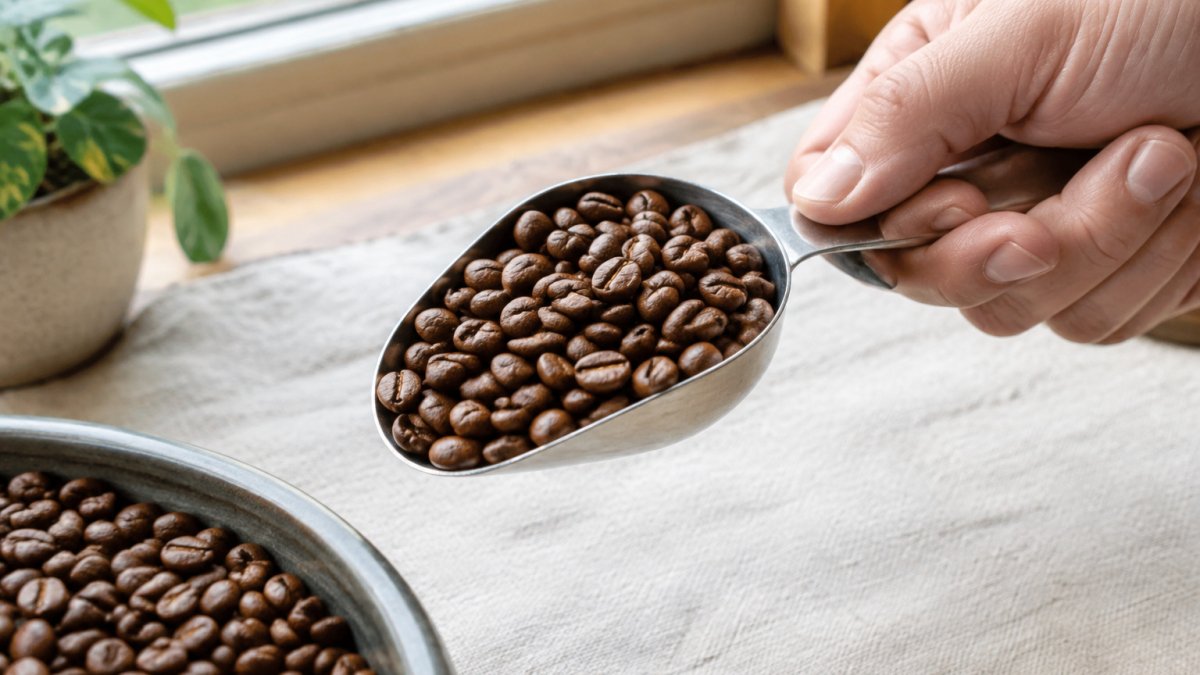
Before you brew, you can learn a surprising amount from the beans themselves, but only if you inspect them in a consistent order and treat each observation as one clue rather than a verdict.
A step-by-step inspection checklist
Step 1, Read the bag before you open it. Check the origin level, altitude, variety, process and roast date.
Step 2, Look at the green bean if you can. Green coffee is the best window into sorting quality.
Step 4, Smell the whole beans. Freshly roasted beans should smell sweet, bready or fruity, not flat, papery or ashy.
Step 5, Taste the brewed cup. Check for cleanliness, sweetness, acidity and finish.
Bean size, color and uniformity
Uniform beans roast evenly. When beans are similar in size and density, they reach the same level of development at the same time, which reduces the chance of some beans tasting baked while others taste sour.
Visual uniformity can't guarantee flavor, but it is a practical sign of careful sorting and roasting. Treat it as one clue among several, not a verdict.
Defects and what they tell you
Defects are beans that were damaged, underripe, overripe or insect-affected before roasting. Common examples include black or sour beans, broken beans, shells, and beans with insect damage or mold.
Watch out: visual inspection has limits. Some flaws only show up when you taste the coffee, so use your eyes as a first filter and your palate as the final check.
Processing methods and what they change
Processing is the step between harvest and drying, and it shapes flavor as much as origin does. Washed coffees have the fruit removed before drying, which tends to produce a cleaner, more transparent cup with clearer acidity.
A label that names the process tells you what kind of cup to expect and gives you a way to judge whether the roaster's tasting notes fit.
From green bean to cup: connecting the clues
The most reliable way to use visual signs is to compare them against the cup. If a lot looks uniform and smells sweet but tastes hollow, the problem is likely roast development or brewing rather than sorting. If it looks uneven and tastes sour and harsh, sorting and defect levels are the more likely explanation. Keeping brief notes on each bag, origin level, process, roast date, what you saw and what you tasted, builds a personal reference that no label can replace.
How to Read a Single Origin Label
A single origin label can name anything from a country to a single farm, and those levels are not equivalent. The most useful skill a buyer can develop is reading the label as a hierarchy of specificity, because each step up the ladder tells you more about who grew the coffee and how it was handled.
The traceability ladder: country, region, cooperative, washing station, estate, farm
At the broadest level, a label may say only "Colombia" or "Ethiopia." That confirms the country of origin but says nothing about the farm, the altitude, the variety or the processing.
The next level is the region: Sidama in Ethiopia, Nyeri in Kenya, Huila in Colombia, Antigua in Guatemala.
Above that sit the cooperative and the washing station.
At the top are the estate and the farm. An estate is a single managed property, often with its own mill; a farm is the smallest identifiable unit.
What each level does and does not prove
Specificity proves traceability, not quality.
What specificity does give you is a way to check claims. If a bag names a farm and an altitude, you can compare that against the roaster's other lots, look up the region, and ask whether the flavor description fits the place.
Watch out: a long label is not the same as a specific one. Marketing language about "mountain-grown" or "hand-picked" can sit alongside a country-only origin and still tell you nothing about the farm or the process.
The label fields worth checking, in order
When you pick up a bag, read it in this order:
- Origin level, country, region, washing station, estate or farm. Note which one is named.
- Altitude, a range in meters is more useful than a single number, and it should be plausible for the region.
- Variety, Bourbon, Typica, SL28, Heirloom, Caturra and others behave differently in the cup; a named variety is a sign of lot-level sourcing.
- Process, washed, natural, honey, anaerobic and other methods change flavor substantially, so the label should say which one.
- Roast date, a date, not a best-before stamp.
- Tasting notes, useful as a guide, but they describe the roaster's impression, not a guarantee.
Our product listings follow this approach, giving the region, altitude, variety, process and tasting profile for each coffee so you can compare them directly.
Freshness, Roast Date and Storage After Opening
Freshness affects flavor as much as origin does. Coffee starts losing aroma soon after roasting, so the roast date matters more than a best-before date.
Once you open a bag, protect the beans from air, light, heat and moisture. Store them in an airtight container away from the stove and the sink.
Freshness affects flavor as much as origin does, and a few storage habits make a noticeable difference.
| Factor | What to do | Why it matters |
|---|---|---|
| Roast date | Check the roast date, not just best-before | Coffee loses aroma soon after roasting |
| Storage | Use an airtight container away from heat and light | Air, light, heat and moisture degrade flavor |
| Grinding | Grind just before brewing | Ground coffee goes stale much faster than whole beans |
| Refrigerator | Avoid storing beans in the refrigerator | Condensation can damage the beans |
| Freshness window | Many people prefer coffee within a few weeks of roasting | Taste preferences vary |
Cupping, Sensory Checks and Choosing Single Origin Espresso Beans
Cupping is the standard professional method for evaluating coffee.
For espresso, single origin beans can be more demanding than blends. Their distinct acidity can taste sharp if the shot is under-extracted, so start with a medium roast and adjust your grind.
Sensory checks help you choose. A Guatemala single origin gives you another flavor profile to put these checks into practice. You can taste these differences firsthand by trying a Colombia single origin alongside another origin.
Start Your Own Single Origin Tasting at Home
The simplest way to learn what single origin means is to taste several side by side.
Brew each one the same way, using the same grind and water, and take notes on aroma, sweetness, acidity and body. Our guide to specialty coffees for beginners is a useful next step once you know which flavors you enjoy.
Ready to taste the difference? Explore the single origin favorites sample pack and start building your own preferences, one cup at a time.
Frequently Asked Questions
How can you tell if coffee beans are fresh?
Check the roast date on the bag first. Freshly roasted beans are best used within a few weeks of roasting, and a roast date is more useful than a best-before date. Fresh beans have an even, aromatic smell and a slight sheen on the surface, while stale beans smell flat or cardboard-like. Buy whole beans, store them in an airtight container away from heat, light and moisture, and grind just before brewing to keep the flavor you paid for.
Are single-origin coffee beans better than blends?
Not automatically. Single-origin coffees show the character of one place, farm or harvest, which many enthusiasts enjoy for its distinct flavor notes. Blends combine beans from several origins to create a consistent, balanced cup year after year. Single origin does not guarantee quality; a well-processed, freshly roasted blend can taste better than a poorly handled single origin. Choose based on whether you want variety and character or steady, familiar flavor.
What should a single-origin coffee label tell you?
A good label names the country, region and ideally the farm, cooperative or producer, along with the variety, processing method, altitude and roast date. Specific details suggest better traceability, while vague terms like 'premium' or 'origin blend' tell you little. Check that the stated process and altitude match the tasting notes. If a label gives only a country, ask the roaster where the coffee was grown and how it was processed before you buy.
Do high-quality coffee beans have a uniform size and color?
Good beans generally look even: similar size, consistent color and few broken or misshapen pieces. Uniformity suggests careful sorting and processing, which tends to produce a cleaner, more predictable cup. However, visual inspection has limits. Color varies with roast level, and a bag can look uniform while still tasting flat if it is stale. Use appearance as a first filter, then judge the coffee by its aroma and flavor when brewed.
What is the difference between single-origin and varietal coffee?
Single origin refers to where the coffee was grown, such as a specific country, region or farm. A varietal describes the coffee plant type, such as Bourbon, Geisha or Catuai. The same single-origin coffee can contain one varietal or several, so the two terms answer different questions. A label that lists both origin and variety gives you more information about how the cup is likely to taste.
Which single origin beans work best for espresso?
Espresso favors beans with enough body and sweetness to hold up under pressure. Medium to medium-dark roasts from origins such as Brazil or Honduras are often used for a richer, chocolate-led shot, while lighter, fruitier origins like Ethiopia or Kenya can produce brighter espresso but may need more careful dialing in. Freshness matters even more for espresso, so buy in small amounts and use beans within a few weeks of the roast date.
How should single-origin coffee taste?
A high-quality single-origin coffee should taste clean and distinct, with flavor notes that match its origin and processing. For example, a washed Colombian may show citrus or dried fruit with a clear finish, while a natural Ethiopian often shows fruity, floral notes. Good coffee has balance: acidity that brightens rather than sours, and a finish that lingers pleasantly without bitterness or staleness. If the cup tastes flat or muddy, the cause is often age or roasting rather than origin.
Can you judge bean quality without special tools?
Yes, to a useful degree. Look for uniform beans, a fresh aroma, a clear roast date and a label with specific origin details. Then brew a cup and taste it with attention to sweetness, acidity, body and aftertaste. Formal cupping uses standardized scoring, but a simple side-by-side tasting of two coffees brewed the same way will reveal a lot about freshness and clarity. Keep notes on what you taste so you can compare beans over time.
