

9 Best Specialty Coffees for Beginners to Try First
Quick Summary
The best specialty coffee for beginners is usually a medium roast with a clear origin and tasting notes, such as Brazil or Colombia. Specialty coffee is defined by how the beans are grown, processed and roasted. Start with a sample pack to compare a few origins side by side before buying a full bag.
- Choose a medium roast, which balances sweetness and acidity for first-time drinkers.
- Brazil suits mild palates with cocoa and nut notes and low acidity.
- Ethiopia washed offers bright jasmine and bergamot for tea-like clarity.
- Buy whole beans with a roast date and use them within two to three weeks.
- Change only one brewing variable at a time when fixing bitter or sour cups.
Table of Contents
- What Specialty Coffee Means for a First-Time Buyer
- How to Choose Coffee as a Beginner: Roast, Origin and Flavor Notes
- The Best Specialty Coffees to Try First
- How to Start Drinking Coffee When You Don't Like It
- Best Black Coffee for Beginners: Milder Roasts and Easy Brewing
- A Beginner Tasting Plan: Side-by-Side Sampling
- Freshness, Roast Dates and Sample Packs: Where to Start Your Order
- Pick Your First Sample Pack and Brew Tomorrow Morning
- Frequently Asked Questions
What Specialty Coffee Means for a First-Time Buyer
Last Updated: November 10, 2026
If you are looking for the best specialty coffee for beginners, start with one idea: specialty coffee is about how the beans were grown, processed and roasted, not just how strong the cup tastes. Specialty coffee beans are often hand-selected and small-batch roasted, so that each bag reflects its origin. Specialty coffee is sold by origin, roast level and flavor profile, which gives a first-time buyer real choices.
Specialty coffee is generally defined by careful sourcing and roasting rather than by a single chemical measure. For a newcomer, the practical difference is clarity. A bag labeled with an origin, a roast level and tasting notes tells you what to expect before you brew.
Mass-market coffee usually blends beans for consistency across millions of cups. Specialty coffee lets the farm, the region and the roaster show through. You will notice this most in flavor: a Brazil tastes different from an Ethiopia, and a medium roast tastes different from a dark one.
Start with two or three questions. Do you want something mild and familiar, or something bright and fruity? Do you take milk or drink it black? How much are you willing to spend per bag? Those answers narrow the field faster than any list of technical terms.
How to Choose Coffee as a Beginner: Roast, Origin and Flavor Notes
Roast level is the easiest place to begin, but it helps to know what is actually happening to the bean. Green coffee is dense and grassy; roasting drives off moisture and triggers browning reactions that create the flavors we recognize. A light roast stops that process earlier, so the bean keeps more of its origin character, the floral, fruity or citrus notes that come from the farm and processing method.
Origin shapes flavor too, and processing method explains much of the difference. A washed coffee, where the fruit is removed before drying, tends to taste clean and clear, with acidity that reads as citrus or stone fruit. A natural coffee, dried with the fruit still around the bean, often tastes sweeter and more berry-like. Honey processing sits between the two, with a syrupy sweetness and softer acidity. When you read a bag, the origin and processing together tell you more than the roast level alone.
Here is how common origins usually present in a medium roast:
- Brazil: cocoa, nuts, low acidity, heavy body. A safe first single origin.
- Colombia: caramel, red apple, balanced acidity. Widely approachable.
- Ethiopia (washed): jasmine, bergamot, bright citrus. For drinkers who like tea-like clarity.
- Ethiopia (natural): blueberry, strawberry, wine-like sweetness. Fruit-forward and distinctive.
- Peru: salted caramel, soft citrus, silky body. Gentle but not boring.
- Guatemala: milk chocolate, orange, medium body. A bridge between nutty and fruity.
Read the tasting notes on the bag as a guide, not a guarantee. Words like chocolate, caramel, nutty or sweet describe a smooth, familiar cup. Words like citrus, berry or jasmine describe a brighter cup with more acidity. Pick the style that matches flavors you already enjoy in other foods, if you like dark chocolate and nuts, start with Brazil or a medium house blend; if you like fruit tea or berries, try a washed Ethiopia or a natural process coffee.
A simple way to decide:
- Mild and familiar: medium roast with chocolate or nut notes (Brazil, House Blend).
- Sweet and balanced: medium or medium-light roast with caramel notes (Colombia, Peru).
- Bright and fruity: light-to-medium roast from an East African origin (Ethiopia washed or natural).
Whole beans generally keep their flavor longer than pre-ground coffee, because grinding exposes more surface area to air.
Watch out: a bag with no roast date and vague notes like "bold" or "smooth" tells you almost nothing; treat it as a gamble rather than a guide.
Here is how common origins usually present in a medium roast:
| Origin | Typical flavor | Note |
|---|---|---|
| Brazil | Cocoa, nuts | Low acidity, heavy body; a safe first single origin |
| Colombia | Caramel, red apple | Balanced acidity; widely approachable |
| Ethiopia (washed) | Jasmine, bergamot | Bright citrus; for tea-like clarity |
| Ethiopia (natural) | Blueberry, strawberry | Fruit-forward and distinctive |
| Peru | Salted caramel, citrus | Silky body; gentle but not boring |
| Guatemala | Milk chocolate, orange | Medium body; bridges nutty and fruity |
The Best Specialty Coffees to Try First
Our Single Origin Favorites Sample Pack lets you test several origins before you commit to a full bag. The five coffees below are good first choices, and each suits a different palate.
1. Breakfast Blend: the easiest place to start
Our Breakfast Blend is a medium roast of South American coffees with a smooth, familiar profile. Shop the Breakfast Blend to try it as a daily brew.

2. House Blend: balanced, nutty and chocolatey
Our House Blend combines coffees from Central and South America into a medium-bodied cup with nutty, sweet chocolate notes and a clean finish. Explore the House Blend for everyday drinking.

3. Brazil Santos: smooth, cocoa-forward single origin
Brazil Santos is a medium roast with an elegant, smooth cup and cocoa notes. Single origins like this let you taste one origin's character without blending. Order the Brazil Santos to compare it with a blend.
4. Peru: salted caramel and citrus with a silky sweetness
Peru is a medium roast with salted caramel, citrus and a silky sweetness. Buy the Peru coffee and taste the caramel notes for yourself.
5. Ethiopia Natural: fruity and caramel for curious palates
Ethiopia Natural is a medium-light roast with milk chocolate, fruity and caramel notes, processed by full natural drying.
How to Start Drinking Coffee When You Don't Like It
If coffee tastes bitter or harsh to you, the problem is usually roast level or brewing, not coffee itself. Start with a medium roast, since darker roasts are more bitter. Add milk or a small amount of sugar at first, then reduce it gradually as your palate adjusts.
Try a lower-strength brew. A slightly weaker cup can taste sweeter and less sharp. Serve it at a comfortable temperature, not piping hot, because very hot coffee can taste more acidic.
Many people who dislike coffee actually enjoy the flavors of a well-roasted single origin. Try a sample pack instead of a full bag so you can find a style you like without wasting money.
Best Black Coffee for Beginners: Milder Roasts and Easy Brewing
Drinking coffee black is easier with a medium roast and a smooth origin. Breakfast Blend and Brazil Santos are both gentle, low in harshness and easy to drink without milk.
For brewing, a standard drip machine or a French press works well. Use about two tablespoons of ground coffee per six ounces of water as a starting point, then adjust to taste. Grind size should match your brewer: coarse for a French press, medium for drip.
Most beginners hit one of three problems in the first few weeks. Here is how to diagnose and fix each one.
If the cup tastes bitter or harsh: the most common causes are over-extraction (too fine a grind, too long a brew, or too much coffee for the water) or a roast that is darker than you like. Try a coarser grind first, then reduce the brew time, then reduce the dose slightly.
If the cup tastes sour or sharp: this is usually under-extraction. The grind is too coarse, the water is not hot enough, or the brew finished too quickly. Try a finer grind, use water just off the boil, and extend the brew time.
If the cup tastes weak or watery: increase the dose before you change anything else. Two tablespoons per six ounces is a starting point, not a rule, many beginners find they prefer closer to two and a half. A finer grind also increases strength by extracting more from the same grounds.
Watch out: changing grind, dose and temperature all at once makes it impossible to know which fix worked. Change one variable per brew and taste the difference.
A simple French press method for beginners: add coarse grounds to the carafe, pour water just off the boil, stir once, wait four minutes, then press slowly and pour immediately. For drip, use a medium grind and let the machine finish before pouring. Either way, drink the coffee within twenty minutes of brewing, it fades quickly once it cools.
A Beginner Tasting Plan: Side-by-Side Sampling
The fastest way to learn your preferences is to taste side by side. Order a sample pack, brew each coffee the same way, and pour small amounts into identical cups.
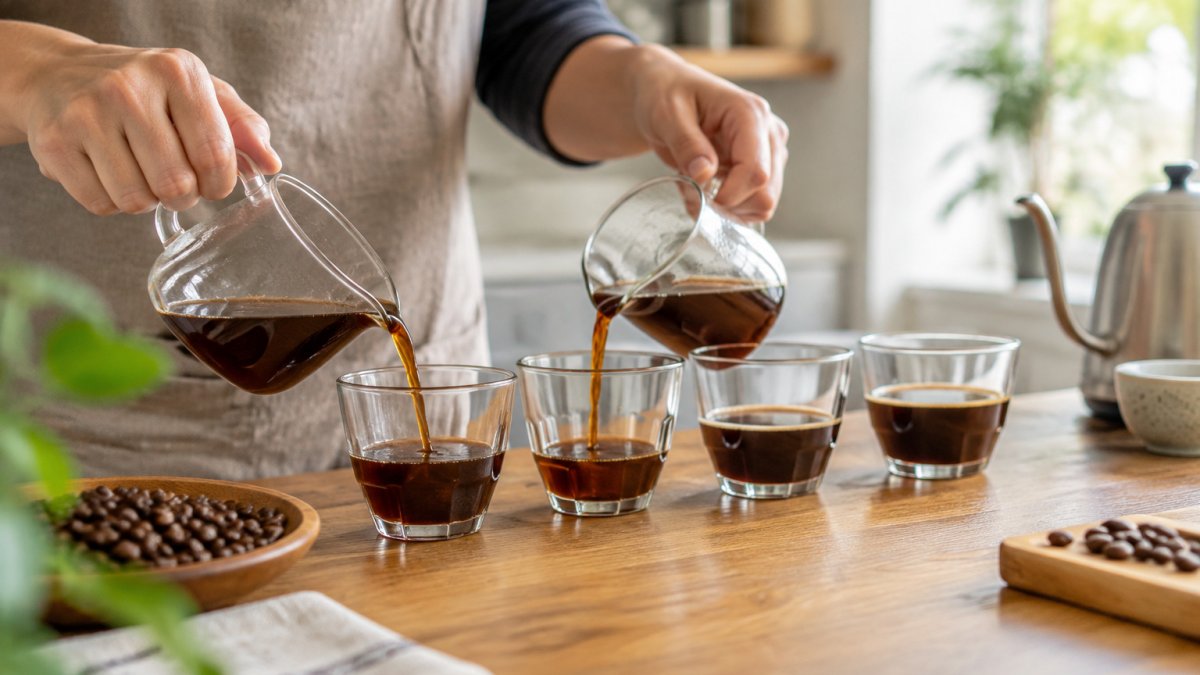
Follow these steps:
- Brew each sample with the same dose, water and grind.
- Taste each one black, first at a warm temperature.
- Write down the first flavor you notice: chocolate, caramel, fruit or nut.
- Rate body (light or heavy) and acidity (flat or bright).
- Repeat the next day to confirm your impression.
Tasting coffee side by side quickly reveals what you enjoy. Most beginners find they prefer either the cocoa and nut profile or the bright, fruity profile, and that choice becomes their starting point.
Freshness, Roast Dates and Sample Packs: Where to Start Your Order
Freshness has a large effect on flavor. Coffee tastes best within a few weeks of roasting. Look for a roast date on the bag rather than only a best-by date, and buy in sizes you will finish in about two to three weeks.
Store whole beans in an airtight container away from heat, light and moisture. Grind just before brewing. Avoid the freezer for everyday storage, since repeated opening causes condensation.
For a first order, a sample pack is a low-commitment option. Our Single Origin Favorites Sample Pack includes six 2oz packs, so you can taste a range before choosing a full bag. Browse the Single Origin Favorites Sample Pack to start there.

Pick Your First Sample Pack and Brew Tomorrow Morning
The best specialty coffee for beginners is the one you enjoy drinking. Start with a medium roast, choose an origin whose flavors appeal to you, and taste a few side by side before committing to a full bag.
At Calamotti Coffee, we want your first cup to feel calm and satisfying, not like a test. Pick one coffee from this list, brew it tomorrow morning, and notice what you taste. Then subscribe to our emails to hear about new roasts and sample packs as they arrive.
Frequently Asked Questions
What's the best coffee to try for beginners?
Start with a medium roast with a balanced, familiar flavor. The Calamotti Breakfast Blend is a smooth South American blend, and the House Blend adds nutty and sweet chocolate notes with a clean, bright finish. Both have smooth, familiar profiles. Once you know which flavors you enjoy, move to a single origin such as Brazil Santos or Peru to compare how origin changes the cup.
What is the best coffee to drink for the first time?
A medium roast is a common starting point for many drinkers. Look for tasting notes you already recognize, such as chocolate, caramel or nuts. Calamotti's House Blend and Breakfast Blend are medium roasts, and the Best Sellers Sample Pack includes six 2oz packs.
Which specialty coffee beans are smooth and not too bitter?
Medium and medium-light roasts with chocolate or caramel notes tend to taste smooth. Calamotti's Brazil Santos is described as an elegant, smooth cup with cocoa notes, while Peru offers salted caramel and silky sweetness with a citrus lift.
How should beginners brew specialty coffee at home?
Start simple. Use a pour-over, French press or drip machine, and weigh your coffee rather than scooping it. Keep water just off the boil, and grind the beans a little finer than you would for a French press if the coffee tastes weak. Adjust one variable at a time so you can tell what changed the taste.
