

Fresh Roasted Coffee Delivery Timeline: What to Expect
Last Updated: November 22, 2026
Quick Summary
Most fresh roasted coffee orders leave the roastery within a few business days, and total arrival depends on dispatch timing and the shipping option you choose. Expect a standard delivery timeline of about 1 to 5 business days for most US destinations, with rural and island addresses taking longer.
- Order processing, roasting, dispatch and carrier transit are separate stages, and each adds its own delay.
- Standard service to a same-region address usually takes 1 to 3 business days.
- Remote or rural addresses add 1 to 2 business days on standard service.
- Give freshly roasted beans a few days of rest before brewing for a smoother cup.
- Store beans sealed in a cool, dark, dry place rather than in the fridge.
Table of Contents
- Stage by Stage: From Order Processing to Your Door
- Fresh Roasted Coffee Shipping Time by Destination and Method
- How Long to Rest Coffee After Roasting
- Reading Roast Dates and Choosing Your Brew Date
- How to Store Freshly Roasted Coffee Beans on Arrival
- Subscriptions, Preorders, and Handling Delivery Delays
- Planning Your First Order from Calamotti Coffee
- Frequently Asked Questions
Calamotti Coffee roasts in small batches, so the clock on your beans starts at the roaster, not at checkout. Knowing the fresh roasted coffee delivery timeline expectations helps you order at the right moment and brew at the right moment, so understanding the full delivery timeline matters. The short version: most orders leave the roastery within a few business days, and the beans then need a short rest before they taste their best.
We break the process into stages on purpose. Each stage has its own delay, and blurring them together is why many shoppers feel surprised by a "two-week" wait that was really three separate steps. Here is how the whole journey fits together.
- Order processing: the time between your order and the roaster's batch schedule
- Roasting and resting: the time the beans are roasted and allowed to degas
- Dispatch: the time the order is packed and handed to the carrier
- Carrier transit: the time the parcel spends in the post or courier network
Stage by Stage: From Order Processing to Your Door
Each stage adds time, and the total is rarely just the shipping estimate. Treat the stages as a chain, because a delay early on pushes everything after it.
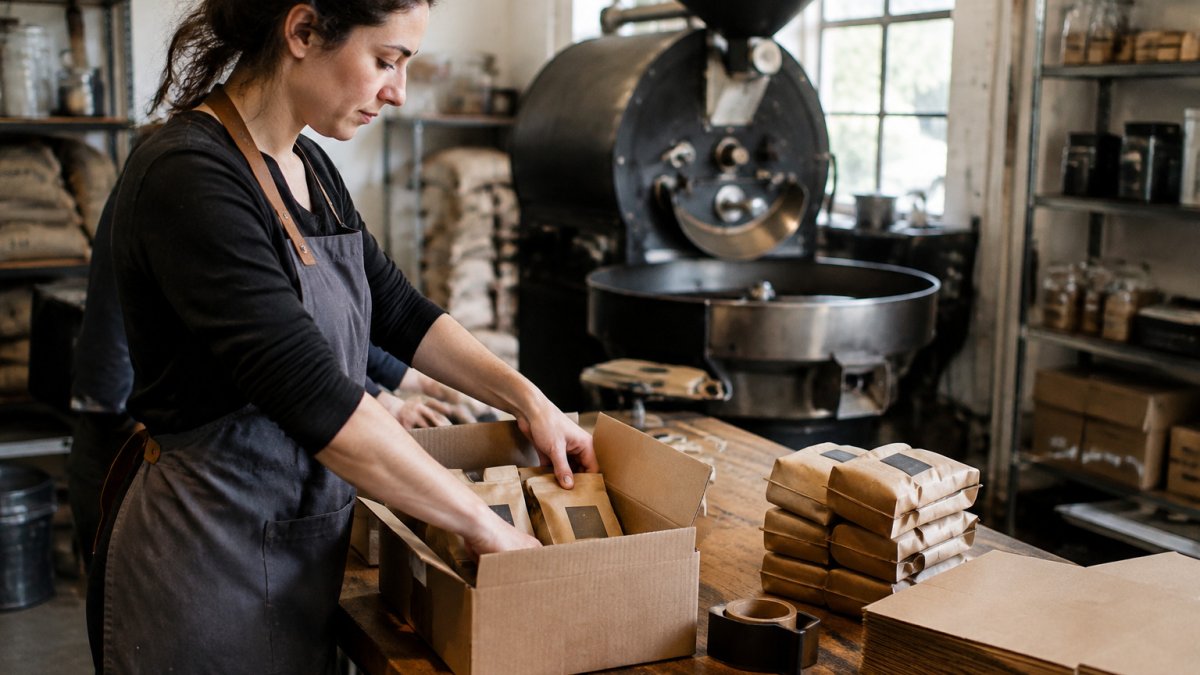
Order processing and roasting time
Fresh roasted coffee releases carbon dioxide over several days, a process called degassing.
Dispatch and carrier transit
Once packed, the order waits for a carrier pickup. After pickup, transit depends on the service you chose. Standard post can take several days, while expedited shipping often arrives in one or two. Check the tracking number as soon as you receive it, and you will know exactly where your beans are.
Fresh Roasted Coffee Shipping Time by Destination and Method
Shipping time depends on two variables: how far the parcel travels and which service level you choose. A roaster in one region will reach a nearby address much faster than a distant one, even on the same service.
| Destination zone | Standard service | Expedited service |
|---|---|---|
| Same region (within ~300 miles) | 1-3 business days | 1-2 business days |
| Adjacent region (~300-800 miles) | 2-4 business days | 1-2 business days |
| Cross-country (~800-1,500 miles) | 3-5 business days | 2-3 business days |
| Remote or rural address (any distance) | Add 1-2 business days | Add 1 business day |
| Island or offshore (domestic) | 5-7 business days | 3-5 business days |
These ranges assume the carrier picks up on a business day and does not encounter weather or holiday delays. Rural addresses often add a day because the parcel moves through a regional hub before final delivery. Island and offshore destinations can add several days because the parcel may transfer between air and ground networks.
Watch out: carrier estimates do not account for the roaster's dispatch schedule, so allow for processing time before you set a brew date.
How Long to Rest Coffee After Roasting
Resting time is the window between roasting and the point the coffee tastes best. Many roasters suggest waiting several days after roasting before brewing. This gives the gas inside the bean time to escape so the extraction is even.
Rest times vary by roast and bean. Lighter roasts usually need a few more days to settle, while darker roasts often taste ready sooner. Ask yourself whether the beans taste sharp or bitter when brewed. That usually means they need more rest.
Watch out: brewing beans the day they arrive often gives thin, sour cups. Give them a few days before you judge the flavour.
Reading Roast Dates and Choosing Your Brew Date
A roast date tells you when the beans were roasted, which is more useful than a best-by date. Coffee is at its peak for a limited window after roasting, and that window is what you should plan around.
Work backward from the roast date. Add the rest period, then pick a brew date in the peak window. If the roast date is a week old when it arrives, you may want to brew within the next few weeks rather than saving it for later.
How to Store Freshly Roasted Coffee Beans on Arrival
Storage decides how much of your freshness survives after delivery. Keep beans sealed in their original bag if the bag has a one-way valve, since the valve lets gas out without letting air in.
- Store the bag in a cool, dark, dry cupboard
- Keep it away from the oven, sink and sunny windows
- Avoid the fridge and freezer unless you plan to freeze the whole bag at once
- Grind only what you need just before brewing
If you buy whole beans, grinding right before brewing keeps flavour far better than pre-ground coffee. Our single origin sample pack lets you compare several origins in small amounts before you commit to a full bag.
Subscriptions, Preorders, and Handling Delivery Delays
Why subscription coffee is often fresher than store bags comes down to turnover. A subscription roaster ships fresh batches on a schedule, while store bags may sit on a shelf for weeks. For a closer look at that difference, read why subscription coffee is often fresher than store bags.
If your delivery runs late, work through these steps in order:
- Check the tracking number first. Check the tracking number first.
- Confirm the dispatch date with the roaster. A parcel that has not been handed to the carrier yet is a dispatch delay, not a transit delay. The roaster can tell you whether your order has shipped.
- Contact the roaster's customer service with your order number. Include your order number, tracking number, and the date you expected delivery when you reach out.
- Contact the carrier if the roaster cannot resolve it. The carrier can open a trace on the parcel. Keep the roaster informed so they can follow up.
Watch out: if the parcel arrives warm or the bag is swollen, the beans may have been exposed to heat or continued degassing in transit. Let the bag rest at room temperature and check the roast date before brewing; if the beans smell flat or stale, contact the roaster.
Planning Your First Order from Calamotti Coffee
Start with a small test. The sample pack is the easiest way to find the origins and roasts you like before you buy a full bag. Once you know your favourites, you can set up a regular order so each bag arrives close to when you will drink it.
If you want a full guide to premium coffee delivered to your home, see our premium coffee beans delivered to home guide.
How long does fresh roasted coffee take to arrive? Total arrival time depends on when your batch is roasted, how far the parcel travels, and the shipping option you choose.
When should I brew freshly roasted beans? Give them a few days of rest after roasting, then brew within the peak window shown by the roast date.
Should I refrigerate my coffee beans? Usually no. Store them sealed in a cool, dark place instead, since the fridge can add moisture and odours.
Frequently Asked Questions
How long does fresh roasted coffee take to arrive after ordering?
The total time from order to arrival depends on three stages: order processing, roasting and dispatch, and carrier transit. Orders are typically processed before roasting, the coffee is then dispatched, and carrier transit adds the final leg. Distance and shipping method are the biggest variables, so check the delivery estimate shown at checkout for your destination and chosen shipping option. Delays from weather or holiday backlogs can extend the timeline, and tracking information will show where your order stands.
How long should you wait before brewing freshly roasted coffee?
Most freshly roasted coffee benefits from a resting period of several days after roasting, because the beans release carbon dioxide during degassing. Brewing too soon can produce sour or uneven flavors, while waiting too long lets freshness fade. A common approach is to start brewing a few days after the roast date and continue through the peak freshness window, which generally lasts a few weeks. Check the roast date on the bag to plan your brew date.
Does coffee roasted to order take longer to ship?
Coffee roasted to order may add processing time before dispatch, because the roast happens after your order is placed rather than from existing stock. The extra time is usually a short roasting and resting window, though the exact timing depends on the roastery's schedule and order volume. Choosing standard shipping instead of expedited shipping does not change roasting time, so the total timeline still depends on when your batch is roasted and dispatched.
How long does fresh roasted coffee stay fresh after delivery?
Freshness after delivery depends on the roast date, how the beans are stored, and how long they are kept sealed. Store whole beans in their sealed bag, ideally with a one-way valve, in a cool, dark, dry place away from heat and moisture. Avoid refrigerating or freezing unless you portion beans carefully to prevent condensation. Grinding just before brewing preserves more flavor, and most beans are at their best within a few weeks of the roast date.
