

9 Ethically Sourced Single-Origin Beans Worth Buying
Last Updated: October 25, 2026
Quick Summary
Ethically sourced single-origin beans come from a single region, farm, or cooperative with verifiable farmer relationships, certifications like Fair Trade or organic, and transparent sourcing practices that ensure fair prices and sustainable growing methods. Buying them means tracing the supply chain backward to know who grew your beans, where they grew, and how they were paid.
- Fair Trade certification guarantees minimum prices and funds community projects, while direct trade relies on roaster reputation without third-party verification.
- Organic certification verifies no synthetic pesticides were used, and shade-grown certification indicates coffee was cultivated under native tree canopy to preserve biodiversity.
- Calamotti offers nine ethically sourced single-origin beans at $19.99 per bag, each with documented sourcing and transparent farmer partnerships.
- Check the roast date on bags to ensure freshness; coffee loses flavor complexity within 2-3 weeks of roasting and noticeably fades after 4 weeks.
- Different brewing methods suit different origins: pour-over for fruity beans, French press for full-bodied, espresso for darker roasts, and Turkish for lighter roasts.
Table of Contents
- Single Origin vs Blended Coffee Beans: Why Origin Matters
- What Makes Coffee Ethically Sourced: Sourcing Transparency and Farmer Partnerships
- How to Choose Single-Origin Coffee Beans for Your Brewing Method
- Organic Single-Origin Coffee: What Pesticide-Free and Shade-Grown Really Mean
- Fair Trade Single-Origin Coffee: Direct Trade vs Fair Trade Certification
-
9 Ethically Sourced Single-Origin Beans from Around the World
- 1. Brazil Santos: Smooth, Elegant Cocoa Notes
- 2. Colombia: Bright Berries and Chocolate
- 3. Ethiopia: Fruity Heirloom Varieties from Sidama
- 4. Kenya: Citrus and Floral Notes with High Altitude Brightness
- 5. Tanzania: Pear and Jasmine from Cooperative Farmers
- 6. Uganda: Floral and Dark Fruit in a Light Body
- 7. Peru: Salted Caramel and Citrus from Cooperativa Norandino
- 8. Honduras: Caramel and Spice from Cafe Organics Marcala
- 9. Guatemala: Dark Chocolate and Butterscotch from Antigua
- Quick Comparison: Origin, Roast Level, and Price
- Freshness and Roast-to-Order: How to Know Your Beans Are Fresh
- Frequently Asked Questions
Single Origin vs Blended Coffee Beans: Why Origin Matters
Single-origin coffee comes from a single region, farm, or cooperative; blends mix beans from multiple origins.
At Calamotti Coffee, we offer a premium selection of single-origin offerings because story and flavor matter as much as caffeine.
With single-origin coffee, you can trace the supply chain backward: the grower's name, cooperative structure, shade-grown practices, and certifications. Blends obscure these details.
What Makes Coffee Ethically Sourced: Sourcing Transparency and Farmer Partnerships
Ethically sourced coffee starts with verifiable relationships between roasters and producers: knowing who grew your beans and whether they were paid fairly.
Verifiable Sourcing and Direct Relationships
Direct trade relationships offer the clearest path to ethical sourcing: working directly with farmers or cooperatives bypasses middlemen, ensures more of the purchase price reaches producers, and enables long-term partnerships.
Cooperatives pool resources and negotiate collectively, giving smallholder farmers more pricing leverage.
Watch out: some roasters claim direct trade without third-party verification. Ask for the farmer's name, the cooperative's name, the region, and ideally a direct link to producer information.
Certifications That Verify Ethical Practices
Fair Trade is the most widely recognized ethical coffee standard.
Organic certification verifies coffee was grown without synthetic pesticides or herbicides, protecting soil health and farmer safety.
Direct trade differs from Fair Trade: it's typically unregulated and relies on roaster reputation rather than third-party certification.
The strongest ethical sourcing combines multiple signals: a named farmer or cooperative, a recognized certification, and transparent pricing and practices.
How to Choose Single-Origin Coffee Beans for Your Brewing Method
Different brewing methods extract coffee differently, and single-origin beans behave differently depending on how you brew them.
Pour-over and drip suit medium roasts, allowing longer water contact to extract more origin nuance; floral or fruity notes shine here.
French press calls for coarser grounds and a longer steep, suiting full-bodied, lower-acidity beans.
Espresso requires consistent grind size and tamping pressure.
If unsure, start with a medium roast single-origin, which adapts well across multiple brewing styles.
Organic Single-Origin Coffee: What Pesticide-Free and Shade-Grown Really Mean
Organic certification means no synthetic pesticides, herbicides, or fungicides were used during cultivation, protecting soil microbiota, preventing chemical runoff, and reducing farmer exposure to toxins.
Shade-grown coffee grows under native tree canopy rather than in full sun on cleared land, preserving forest structure, supporting biodiversity, and preventing soil erosion (Certified Coffee).
Many single-origin coffees from smallholders in Ethiopia, Peru, and Central America are naturally organic because farmers cannot afford synthetic inputs.
Fair Trade Single-Origin Coffee: Direct Trade vs Fair Trade Certification
Fair Trade guarantees minimum prices regardless of market fluctuations, protecting farmers from crashes that could devastate their livelihoods (Fairtrade Minimum Price and Premium Information).
Direct trade bypasses Fair Trade certification and relies on direct negotiation between roasters and producers.
Some roasters combine both: working directly with cooperatives while also pursuing Fair Trade certification for independent verification.
For buyers seeking ethically sourced single-origin beans, Fair Trade certification is the most straightforward signal of verified practices.
9 Ethically Sourced Single-Origin Beans from Around the World
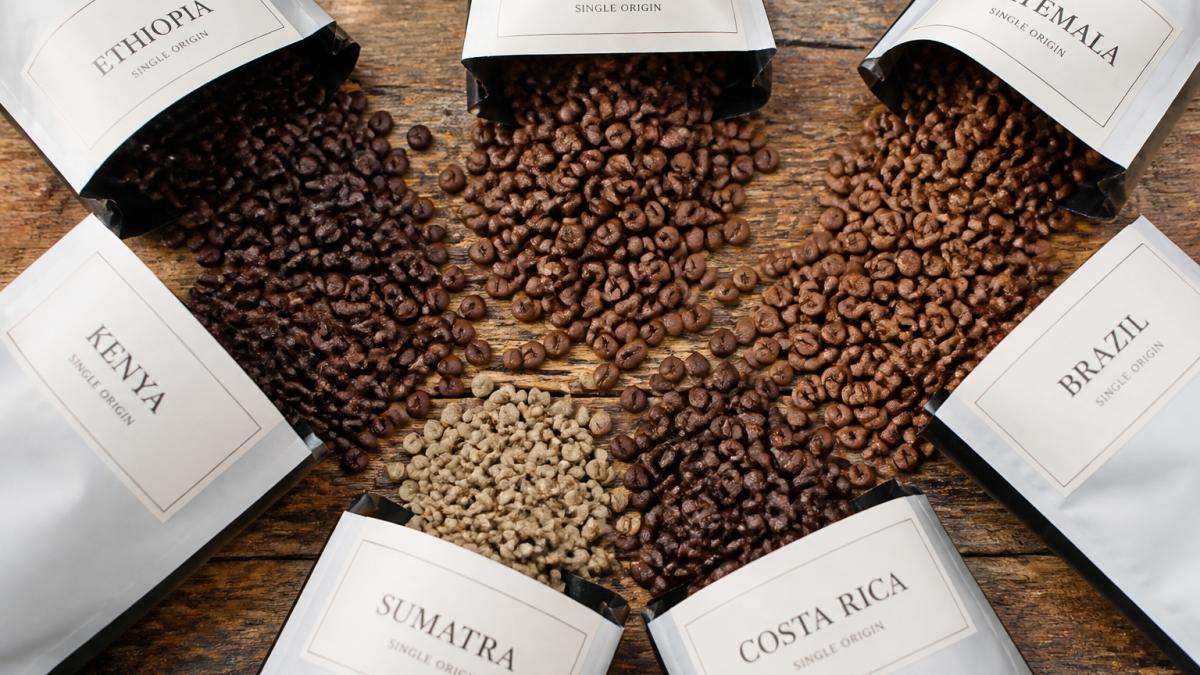
1. Brazil Santos: Smooth, Elegant Cocoa Notes
Brazil Santos delivers a smooth, full-bodied cup with elegant cocoa notes and a clean finish. Grown in volcanic loam soils of Parana and Sao Paulo at 750-1050 meters, these beans develop natural sweetness and low acidity.
Calamotti's Brazil Santos comes from Fazenda Santa Barbara. The Catuai and Mundo Novo varieties produce consistent quality year after year.
Best for: Espresso, French press, or drip brewing when you want a comforting, sweet cup without sharp acidity. Skip if: You prefer bright, fruity, high-acid coffee profiles.
2. Colombia: Bright Berries and Chocolate
Colombian coffee from Medellin balances bright berry notes with chocolate undertones and dried orange complexity. Grown at 1300-1500 meters in volcanic loam soil, these beans develop natural sweetness with moderate acidity.
Calamotti sources from smallholder farmers across the Medellin region using traditional methods. The Castillo, Caturra, Colombia, and Typica varieties create a multi-dimensional cup that works beautifully in pour-over or drip.
Best for: Pour-over, drip, or Aeropress brewing to highlight the berry and chocolate complexity. Skip if: You want a heavy-bodied, low-acid coffee.
3. Ethiopia: Fruity Heirloom Varieties from Sidama
Ethiopian coffee from the Sidama zone represents coffee's ancestral origins. Indigenous heirloom cultivars grow at 1700-1900 meters in nutrient-rich Nitisol soil, producing fruity, complex profiles.
Single Origin Favorites Sample Pack →
Calamotti's Ethiopia comes from smallholder farmers in Sidama who use hand-sorting and raised-bed drying. Mild chocolate notes alongside the fruity character create a balanced cup that is neither too delicate nor too heavy.
Best for: Pour-over or Turkish brewing to experience the full fruity, complex profile. Skip if: You prefer straightforward, simple flavor profiles.
4. Kenya: Citrus and Floral Notes with High Altitude Brightness
Kenyan coffee from Othaya delivers bright citrus and floral notes with the distinctive effervescence of high-altitude African coffees. Grown at 1700-1890 meters on volcanic soil, these beans develop natural acidity and complexity.

Calamotti sources from cooperative farmers in Nyeri County cultivating SL28, SL34, Ruiru 11, and Batian varieties, selected for quality and altitude adaptation.
Best for: Pour-over, Aeropress, or drip brewing to highlight the citrus and floral brightness. Skip if: You prefer full-bodied, low-acid coffee.
5. Tanzania: Pear and Jasmine from Cooperative Farmers
Tanzanian coffee from the Mbeya region offers pear and jasmine notes with strawberry undertones and a light, delicate body. Grown at 1200-1900 meters in clay mineral soil, these beans develop natural sweetness with moderate acidity.
Calamotti partners with small cooperative farmers in Mbeya using traditional methods. The Bourbon and Kent varieties thrive at these altitudes and produce consistently excellent coffee.
Best for: Pour-over or drip brewing to experience the delicate pear and jasmine character. Skip if: You want a bold, heavy-bodied coffee.
6. Uganda: Floral and Dark Fruit in a Light Body
Ugandan coffee from Sipi in the Kapchorwa District delivers floral and dark fruit notes in a light body with mild acidity.
Calamotti sources from smallholder farmers cultivating Bourbon, SL14, SL28, and Blue Mountain varieties. Uganda's coffee is underrepresented in specialty markets, making it an excellent discovery beyond the usual East African suspects.
Best for: Pour-over, drip, or Aeropress for a balanced, nuanced cup. Skip if: You specifically want full-bodied or high-acid coffee.
7. Peru: Salted Caramel and Citrus from Cooperativa Norandino
Peruvian coffee from Piura and Amazonas offers salted caramel sweetness with silky texture and bright citrus notes. Grown at 1100-1700 meters in clay mineral soil, these beans develop natural sweetness with balanced acidity.
Calamotti partners with Cooperativa Agricola de Servicios Norandino, a cooperative of smallholder farmers practicing sustainable agriculture. The Caturra, Bourbon, Catuai, Pache, and Catimor varieties create a multi-layered cup.
Best for: Espresso, flat whites, or drip brewing when you want sweetness and balance. Skip if: You prefer bright, fruity, high-acid profiles.
8. Honduras: Caramel and Spice from Cafe Organics Marcala
Honduran coffee from Marcala delivers caramel, spice, and brown sugar notes in a full-bodied cup. Grown at 1300-1700 meters in clay mineral soil, these beans develop natural sweetness with moderate acidity.
Calamotti sources from Cafe Organics Marcala, a network of 1500 member growers. The medium-dark roast emphasizes caramel and spice character.
Best for: French press, espresso, or drip brewing when you want sweetness and body. Skip if: You prefer light, fruity, high-acid coffee.
9. Guatemala: Dark Chocolate and Butterscotch from Antigua
Guatemalan coffee from Antigua delivers dark chocolate and butterscotch notes with bright fruit undertones. Grown at 1200-1616 meters in volcanic loam soil, these beans develop natural sweetness and balanced acidity.
Calamotti sources from smallholder farmers in Antigua using traditional methods on volcanic slopes. The Bourbon, Catuai, Caturra, and Typica varieties thrive in these conditions.
Best for: Espresso, cappuccino, or drip brewing when you want chocolate and sweetness. Skip if: You prefer light, acidic, fruity profiles.
Quick Comparison: Origin, Roast Level, and Price
| Origin | Roast Level | Flavor Profile | Best Brewing Method | Price |
|---|---|---|---|---|
| Brazil Santos | Medium | Cocoa, smooth, sweet | Espresso, French press | $19.99 |
| Colombia | Medium | Berry, chocolate, orange | Pour-over, drip | $19.99 |
| Ethiopia | Medium-light | Fruity, complex, wine-like | Pour-over, Turkish | $19.99 |
| Kenya | Medium | Citrus, floral, bright | Pour-over, Aeropress | $19.99 |
| Tanzania | Medium-light | Pear, jasmine, strawberry | Pour-over, drip | $19.99 |
| Uganda | Medium-light | Floral, dark fruit, light | Pour-over, drip | $19.99 |
| Peru | Medium | Salted caramel, citrus | Espresso, drip | $19.99 |
| Honduras | Medium-dark | Caramel, spice, brown sugar | French press, espresso | $19.99 |
| Guatemala | Medium | Dark chocolate, butterscotch | Espresso, cappuccino | $19.99 |
All nine origins are available individually at $19.99 per bag. To sample before committing, the Single Origin Favorites Sample Pack includes six 2oz packs of our most popular single origin coffees at $24.99.

Freshness and Roast-to-Order: How to Know Your Beans Are Fresh
Freshness determines whether your single-origin tastes vibrant or flat.
Roast-to-order coffee is roasted after you order, not weeks before shipment, ensuring beans arrive at peak freshness.
Check the roast date on the bag to calculate freshness.
Store whole beans in an airtight container away from heat, light, and moisture.
When you buy ethically sourced single-origin beans, you're investing in quality and traceability.
Choosing ethically sourced single-origin beans means knowing where your coffee comes from and supporting farmers directly.
Frequently Asked Questions
How can I verify that ethically sourced single-origin coffee beans are actually from the origin claimed?
Look for specific grower names, farm locations, and altitude details on the packaging. Calamotti Coffee lists the exact region, grower (whether individual farms or cooperatives), altitude, and processing method for each origin. Reputable roasters provide traceability information because they source directly from farmers or verified cooperatives. Ask for details about the supply chain: the more specific the sourcing information, the more verifiable the claim.
What is the difference between fair trade and direct trade single-origin coffee?
Fair Trade certification sets a minimum price floor and requires certain labor standards, verified by third-party auditors. Direct Trade means the roaster buys directly from farmers or small cooperatives at negotiated prices, often higher than Fair Trade minimums, with a personal relationship. Direct Trade relies on direct negotiation between roasters and producers, but Fair Trade provides independent verification. Both prioritize farmer welfare; Fair Trade emphasizes certification standards.
Is organic single-origin coffee more expensive, and is the price worth it?
Organic single-origin beans typically cost more because they require certification, stricter farming practices, and often smaller yields. Calamotti's single-origin beans are priced at $19.99 per bag, reflecting hand-selected sourcing and small-batch roasting. The value depends on your priorities: if you want to support farms using no synthetic pesticides or herbicides and prefer shade-grown practices that protect ecosystems, the cost reflects real environmental benefits.
How often should I buy fresh beans, and how quickly do they go stale?
Whole beans stay fresh for 2-4 weeks after roasting if stored in an airtight container away from light and heat. Ground coffee loses flavor within days. Calamotti roasts in small batches and ships fresh. For best results, buy only what you'll use within a month. If you enjoy variety, a sample pack lets you try multiple origins without committing to full bags, and you can rotate through different single-origins to keep your ritual fresh.
